


Almost every aesthetic procedure starts with numbing: fillers, skin boosters, microneedling, threads, laser and permanent make-up. Clinics in the UAE mostly use Korean topical anaesthetics in large jars, and the choice usually comes down to two types of cream — single-agent lidocaine or a combination of lidocaine and prilocaine. This article explains the difference and when other formats make sense.
Single-agent lidocaine creams
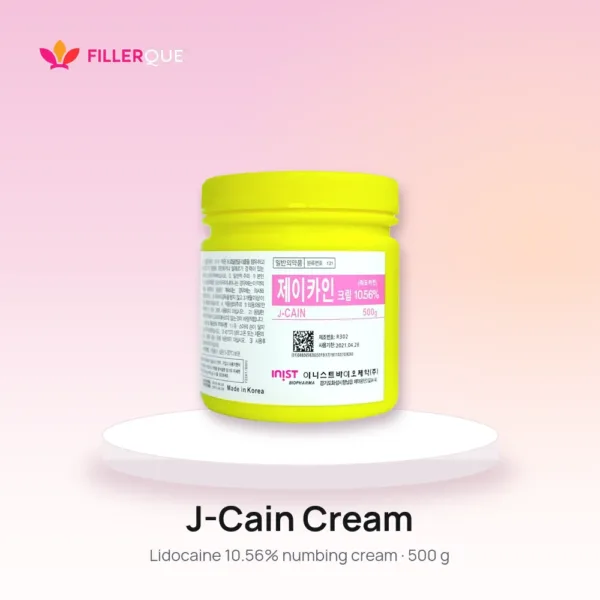
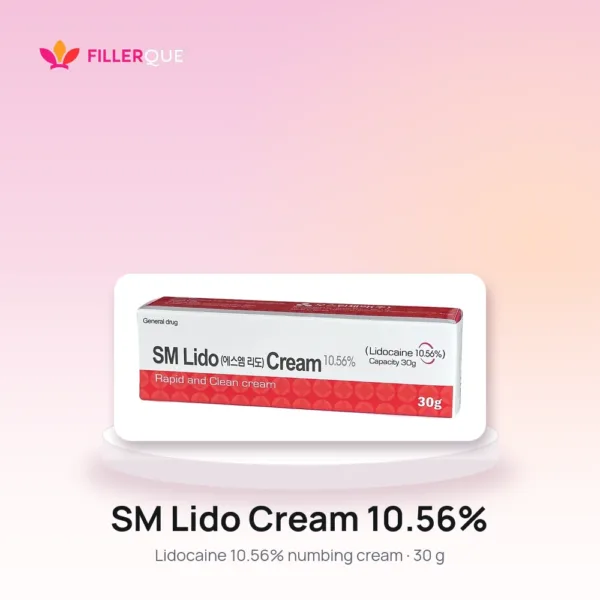
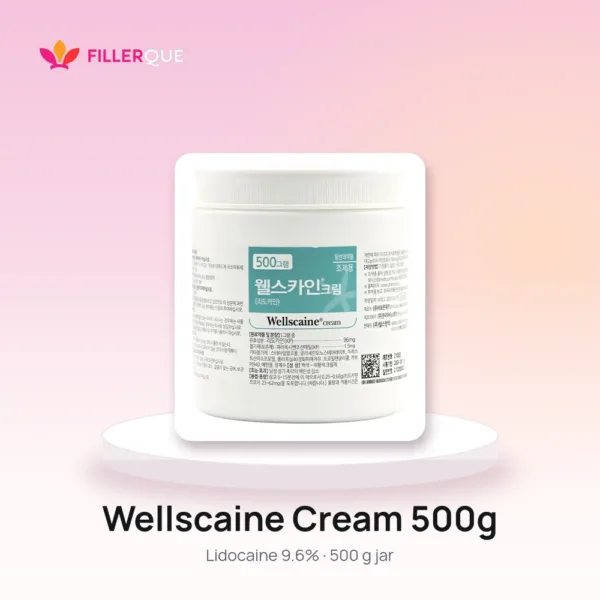
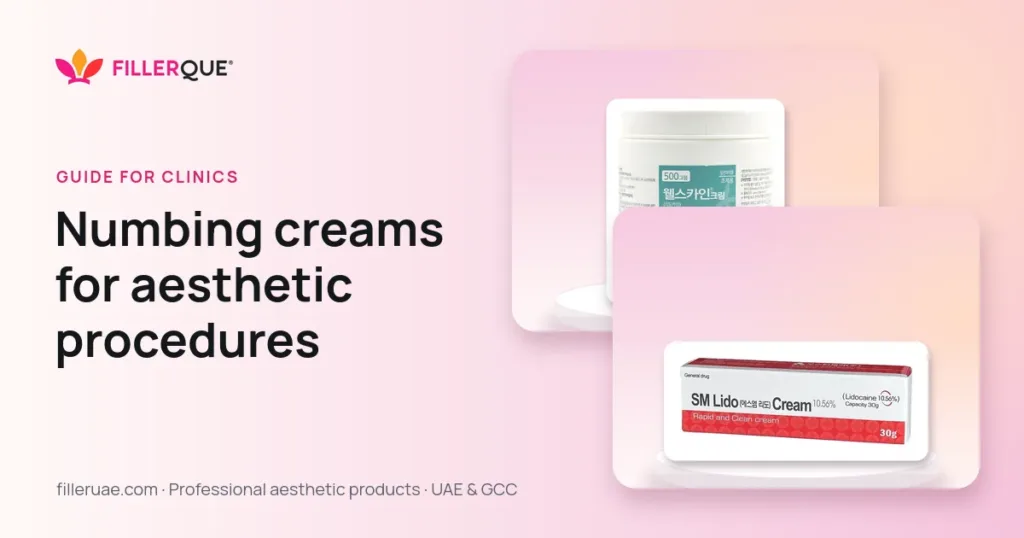
These creams contain one active ingredient, lidocaine, at a high concentration — typically around 9.6–10.56%. In our catalogue these are J-Cain Cream (lidocaine 10.56%, 500 g jar), SM Lido Cream (lidocaine 10.56%, 30 g tube) and the classic Wellscaine Cream (lidocaine 9.6%, 500 g jar). They are valued for a fast onset and a simple formula, and they are widely used before injections and microneedling.
Lidocaine with prilocaine
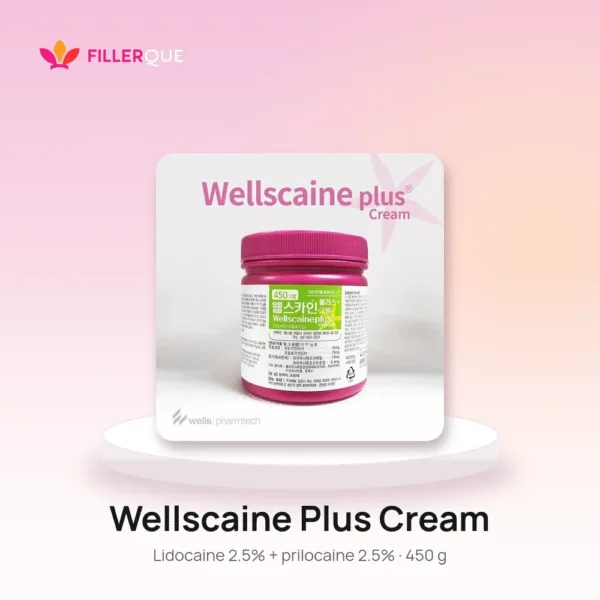
The second type combines two anaesthetics, usually lidocaine 2.5% and prilocaine 2.5%, in a so-called eutectic mixture — the same principle as the well-known EMLA cream. The combination lets the actives penetrate the skin well at a lower concentration of each. In our catalogue this is Wellscaine Plus in a 450 g jar. Practitioners often choose it for longer or more sensitive procedures. Prilocaine has its own precautions: in rare cases it can cause methaemoglobinaemia, so manufacturers limit the area and amount, especially for children and patients with certain conditions.
Sprays and injectable lidocaine
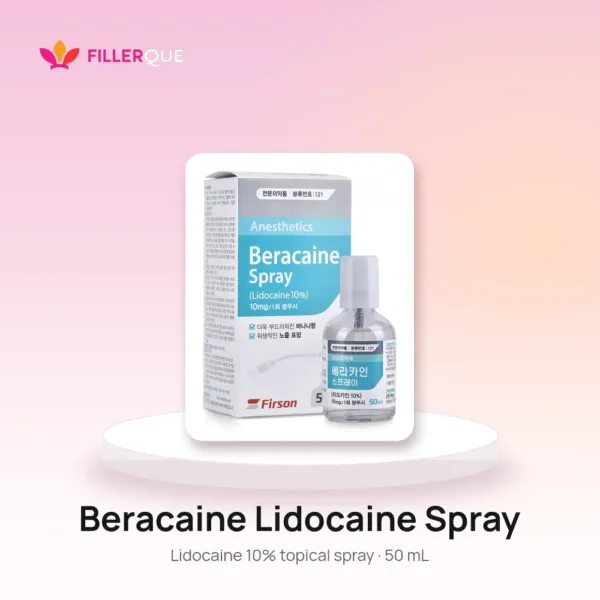
- Spray — Beracaine Lidocaine Spray (lidocaine 10%) is convenient for mucous membranes and small areas where a cream is hard to apply, according to the product’s instructions.
- Injectable lidocaine — Lidocaine HCl 2% in a 20 mL vial is used by physicians for infiltration anaesthesia and nerve blocks, for example before thread lifting or minor surgical procedures. It is a prescription medicine for use by trained medical staff only.
How clinics use topical numbing
- Apply to clean, intact skin only, in the amount and over the area stated by the manufacturer.
- Many protocols use an occlusive film to improve penetration; follow the application time in the instructions.
- Remove the cream completely and disinfect the skin before injection or microneedling.
- Avoid the eyes and do not use on broken or irritated skin.
- Ask about allergies to local anaesthetics before the first treatment.
After the procedure
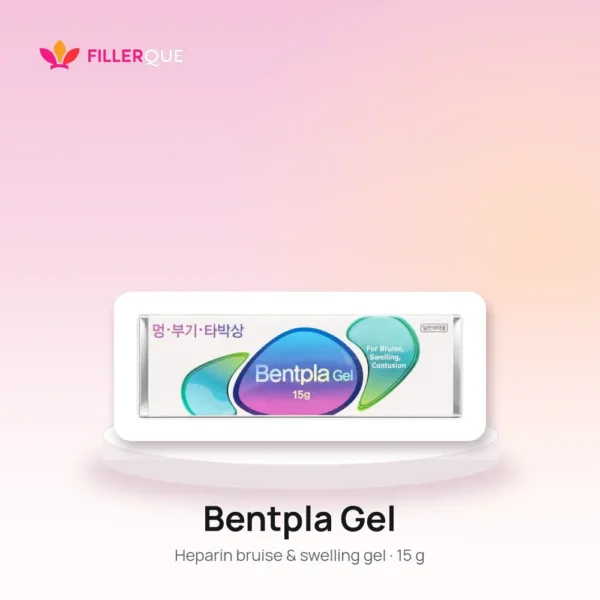
Bruising and swelling are common after injections. Many clinics give patients an aftercare gel such as Bentpla Gel with heparin and aescin — it is in our cosmetics section.
Which size to buy
A 30 g tube suits a small practice or a mobile kit; 450–500 g jars are much more economical for a clinic that numbs patients every day. All numbing products are in the Numbing Creams category with prices in AED.
This article is for healthcare professionals and is not medical advice. Always follow the manufacturer’s instructions and local regulations for anaesthetic products.