


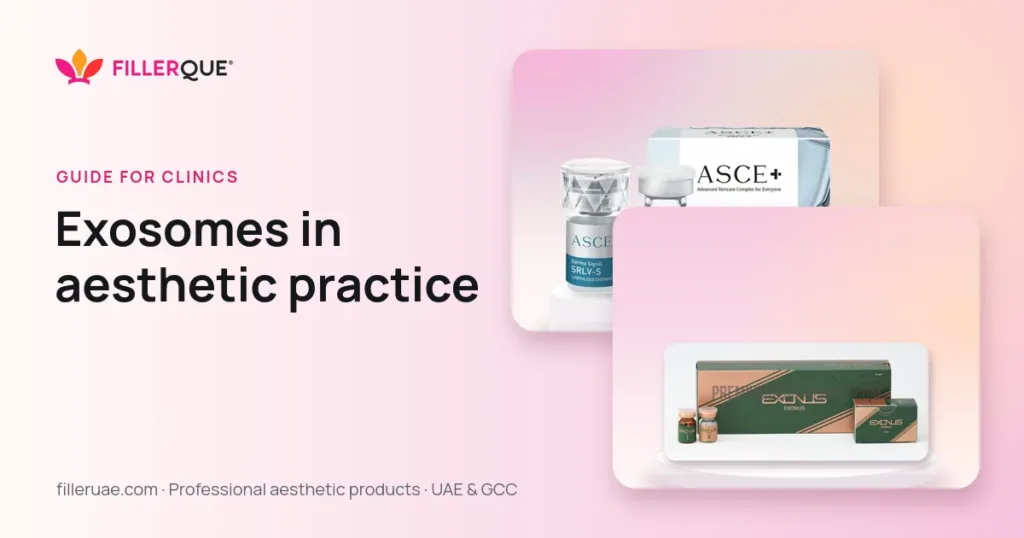
Exosome products have become one of the most talked-about categories in aesthetic skincare. Korean brands offer dozens of kits for skin and scalp, and the labels range from plant-derived to stem-cell-derived exosomes combined with PDRN, peptides and growth factors. This article explains what these products are, how they are usually used and what to check before you add them to your clinic’s protocols.
What exosomes are
Exosomes are tiny vesicles that cells release to exchange signals — proteins, lipids and fragments of RNA. In skincare they are studied for their role in skin repair, hydration and barrier recovery. Products differ in the source of the exosomes: some use extracts from human cell cultures, such as fibroblasts or stem cells, others use plant sources such as ginseng or centella (cica). The source, concentration and purification method are what make one product different from another.
How they are usually applied
Most exosome kits for aesthetic clinics are supplied as a lyophilised powder with a separate diluent. After reconstitution, the solution is most often applied to the skin during or after microneedling, so that the active ingredients reach the skin through the micro-channels. Scalp versions are used in the same way in hair-loss protocols. Always check how the specific product is intended to be used: in many markets exosome products are registered as cosmetics for topical application rather than as injectables, and the label and instructions should be followed accordingly.
How to read the composition
- Source of exosomes — human cell culture, stem cell conditioned media or plant-derived.
- Additional actives — PDRN, peptides, growth factors, hyaluronic acid, brightening ingredients such as tranexamic acid or arbutin.
- Format — number of vials of powder and diluent per box, and the volume of each.
- Manufacturer and country printed on the box.
Exosome products in our catalogue
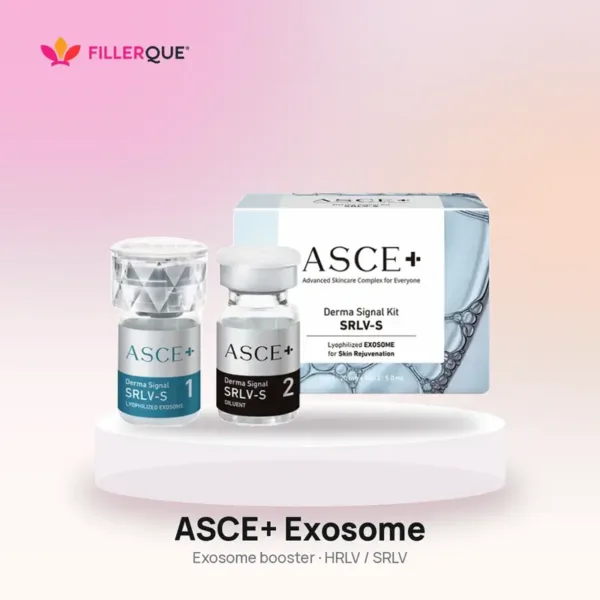
- ASCE+ Exosome
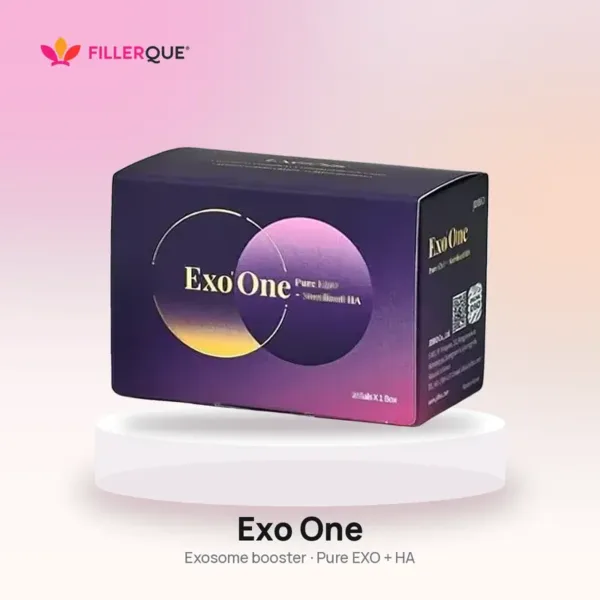
- Exo One — lyophilised exosomes with a solvent ampoule
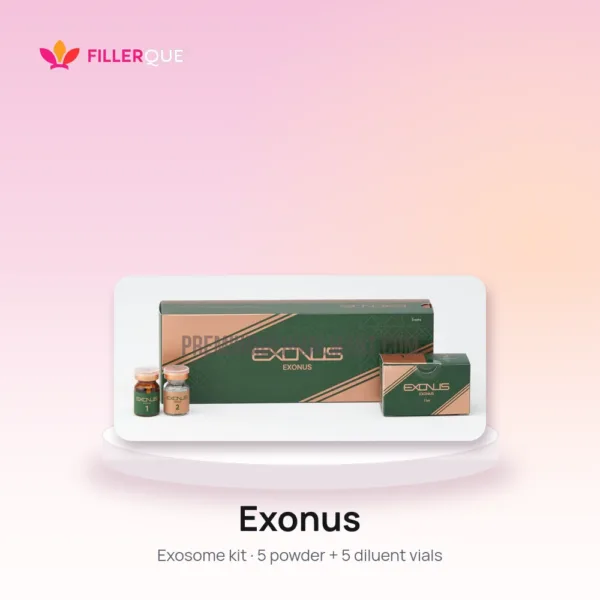
- Exonus — ginseng and cica exosomes with PDRN, atelocollagen and peptides
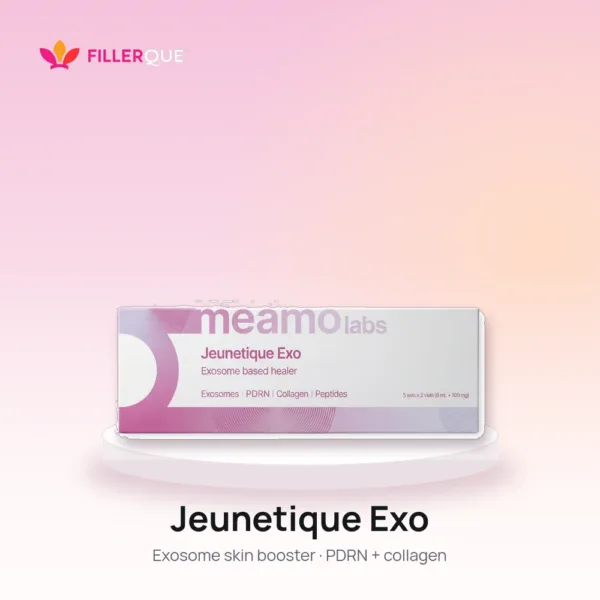
- Jeunetique Exo — exosomes with PDRN, atelocollagen and growth factors
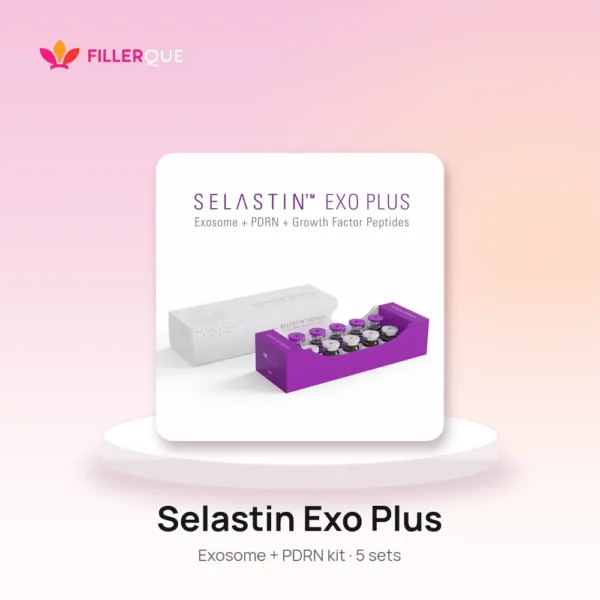
- Selastin Exo Plus — cica exosome with PDRN and growth factor peptides
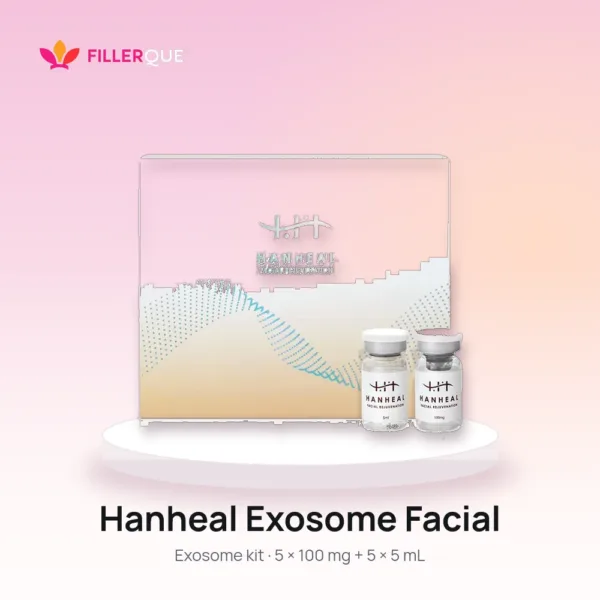
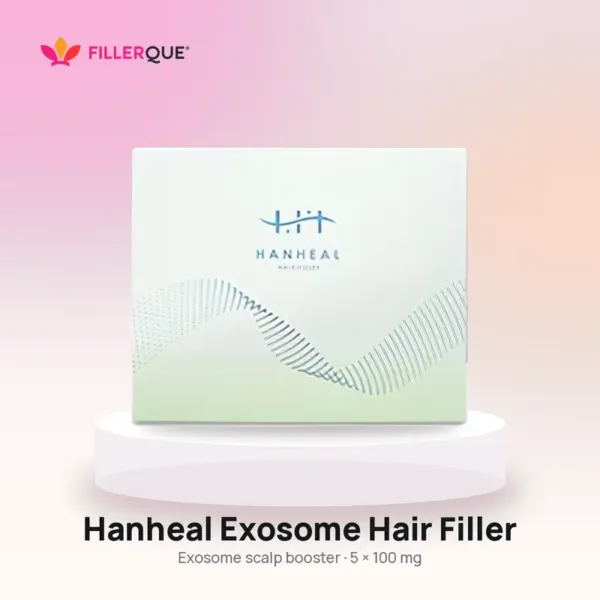
- Hanheal Exosome Facial and Hanheal Exosome Hair Filler — for skin and scalp
The full list is in the Exosomes category with composition and package on each product page.
Storage and delivery
Exosome kits are sensitive to heat. Check the storage conditions on the box — many need refrigeration after arrival — and make sure the supplier ships them with cooling. We pack temperature-sensitive products with thermal insulation and cooling gel packs; read more about how we ship them to the UAE and GCC.
What to combine them with
Because most exosome protocols use microneedling, clinics usually order them together with microneedling cartridges, rollers and multi-needles. For regenerative injectable courses, see also PDRN and PN boosters and our article on PN vs PDRN.
This article is for healthcare professionals and is not medical advice. Follow the manufacturer’s instructions and local regulations for each product.