

Thread lifting uses absorbable sutures placed under the skin with a needle or a blunt cannula. Depending on their shape, threads either lift and reposition tissue or work mainly as a collagen stimulator that improves firmness. The catalogue of a typical Korean thread brand includes dozens of types, so it helps to sort them by two parameters: the shape of the thread and the material it is made of.
Thread types by shape
- Mono threads — smooth single threads. They do not lift by themselves; they are placed in a grid to stimulate collagen and improve skin texture and firmness.
- Screw and twin threads — a thread twisted around the needle, or two threads twisted together. They give more volume and stimulation than mono threads in the same area.
- Multi and Boom threads — several threads in one needle, used where more stimulation or volume is needed per entry point.
- Cog threads — threads with barbs (cogs) that hold the tissue. These are the lifting threads used for the mid-face, jawline and neck. Barbs can be cut, moulded or pressed, in one direction or in both.
- Mesh threads — a braided or mesh structure for volume and support.
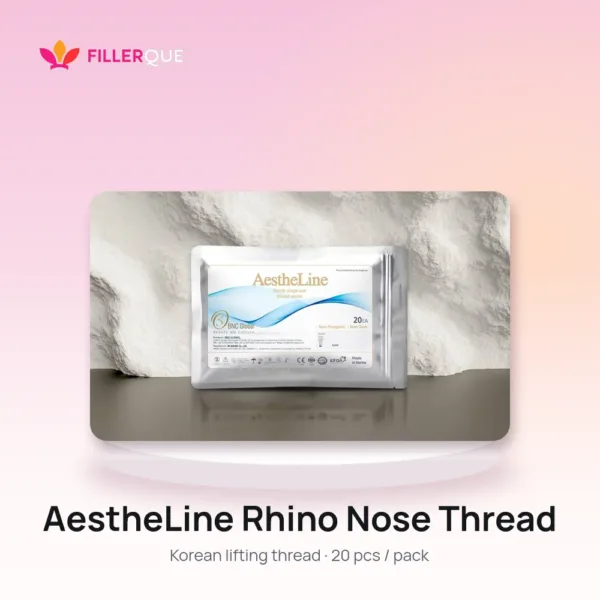
- Nose threads — short, firm cog threads designed for the nasal bridge and tip.
- Cannula threads — threads loaded into a blunt cannula instead of a sharp needle, which many practitioners prefer for areas with more vessels.
Thread materials
- PDO (polydioxanone) — the most common material. It is absorbed relatively quickly, usually within about six months, and stimulates collagen during that time.
- HA PDO — PDO coated with hyaluronic acid.
- PLLA (poly-L-lactic acid) — absorbed more slowly than PDO and known for its collagen-stimulating effect.
- PCL (polycaprolactone) — one of the slowest-absorbing materials used for threads.
- PGA and PCLLA — other absorbable polymers used in some thread lines.
Absorption times differ between manufacturers and between thread designs, so the figures above are only a general guide. The instructions for the specific product are what count.
What to check when ordering
- Gauge and length of the needle or cannula — they define where the thread can be used.
- Material — PDO, PLLA, PCL or another polymer.
- Barb design for cog threads — direction and type of cogs.
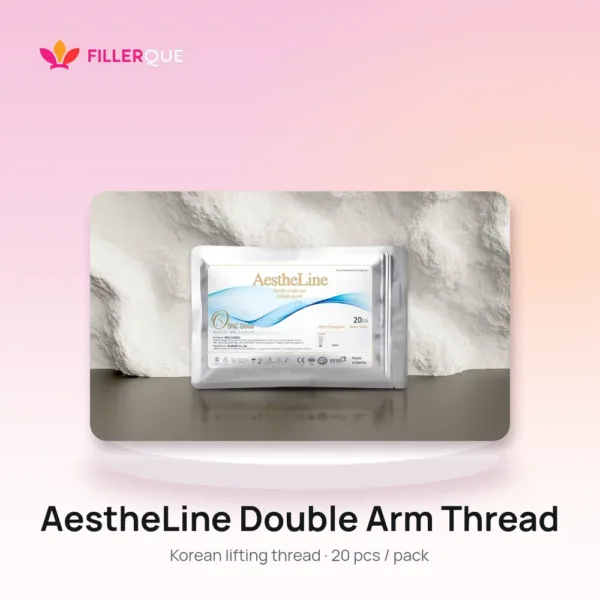
- Pack size — most threads are sold in packs of 20; double-arm threads usually in packs of 2.
- Sterile packaging with batch number and expiry date.
AestheLine threads in our catalogue
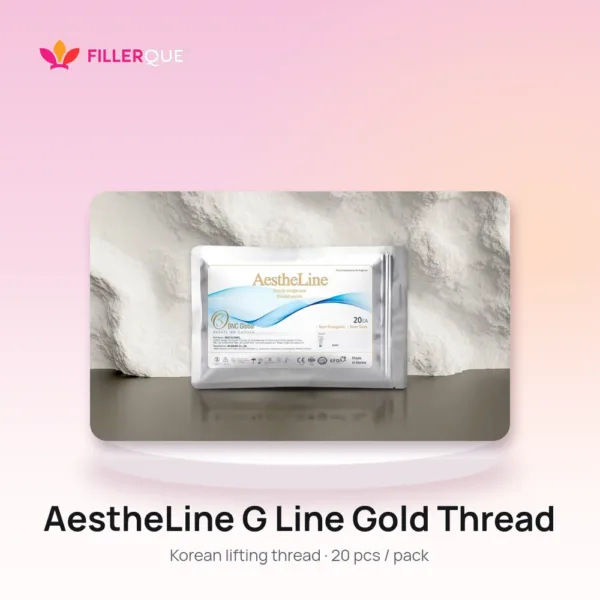
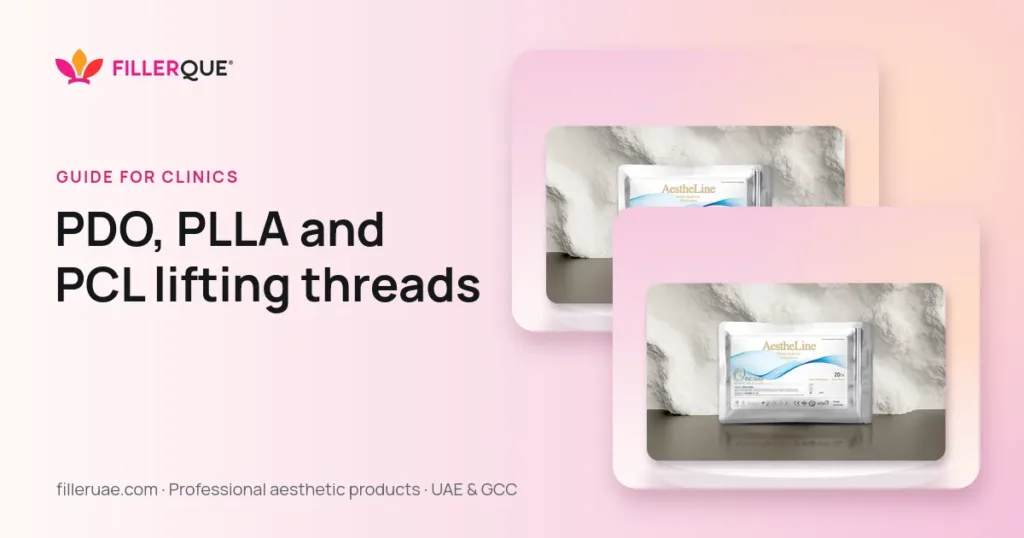
The Threads category includes the AestheLine range from Korea: Mono, Screw, Twin and Multi PGA threads, Boom volume threads, cog threads such as N Cog, M1 Cog and Blunt Needle Cog, Cog Mesh and Mesh Cover PCL, the Rhino Nose thread, Double Arm threads, cannula threads and G Line gold threads. Most types are available in several materials — choose the material and size on the product page.
What else is needed for a thread procedure
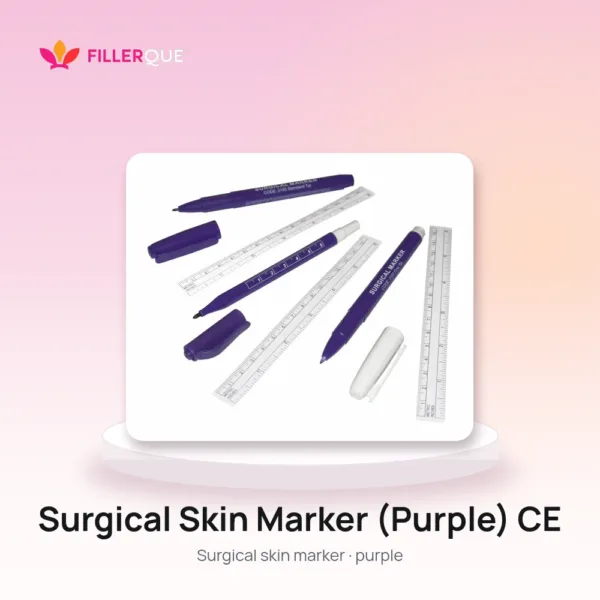
Thread procedures are usually done under local anaesthesia. Clinics order threads together with numbing creams or injectable lidocaine, a surgical skin marker for planning and an aftercare gel for bruising. For regular orders, ask about wholesale pricing.
This article is for healthcare professionals and is not medical advice. Threads must be used by qualified practitioners according to the manufacturer’s instructions.