


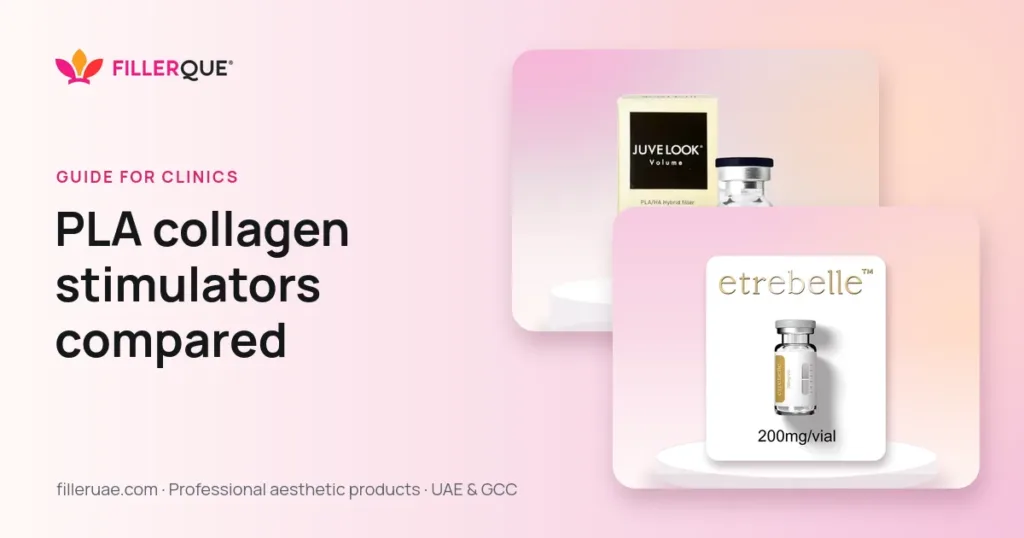
Polylactic acid products belong to the group of collagen stimulators, or biostimulators. Unlike a hyaluronic acid filler, which gives volume right after injection, a PLA product works gradually: the particles trigger the skin’s own collagen production over the following weeks. Korean brands have made this group much more varied in recent years, and clinics now choose between several formulas. This article explains the basics and compares the PLA products in our catalogue.
How PLA collagen stimulators work
Polylactic acid is a biodegradable polymer that has been used in medicine for decades, for example in absorbable sutures. When microparticles of PLA are placed in the skin, they cause a controlled tissue response: fibroblasts produce new collagen around the particles, and the polymer itself is slowly broken down and absorbed. The visible effect — firmer, denser skin and a gradual improvement of volume — builds up over weeks, and manufacturers usually recommend a course of several sessions.
PLLA and PDLLA: what the letters mean
- PLLA (poly-L-lactic acid) is the classic form used in the first generation of PLA stimulators. It is supplied as a powder that usually needs time to hydrate after reconstitution.
- PDLLA (poly-D,L-lactic acid) is a mix of D and L forms. Manufacturers of PDLLA products state that it reconstitutes more easily and is absorbed faster than PLLA, and many Korean products of the new generation are based on it.
Many products add a carrier or a second active ingredient: carboxymethylcellulose (CMC) helps keep particles evenly suspended, hyaluronic acid adds immediate hydration, and some versions include polynucleotides.
Products in our catalogue
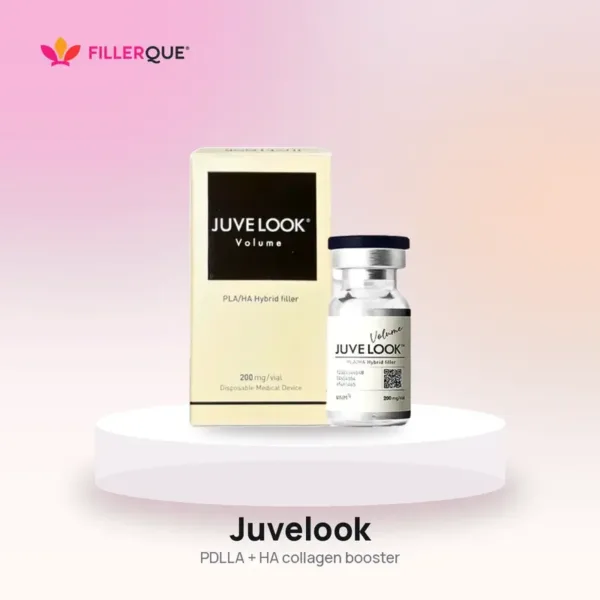
- Juvelook — PDLLA combined with hyaluronic acid, offered as Juvelook (50 mg) for skin quality and Juvelook Volume (200 mg) for volume restoration.
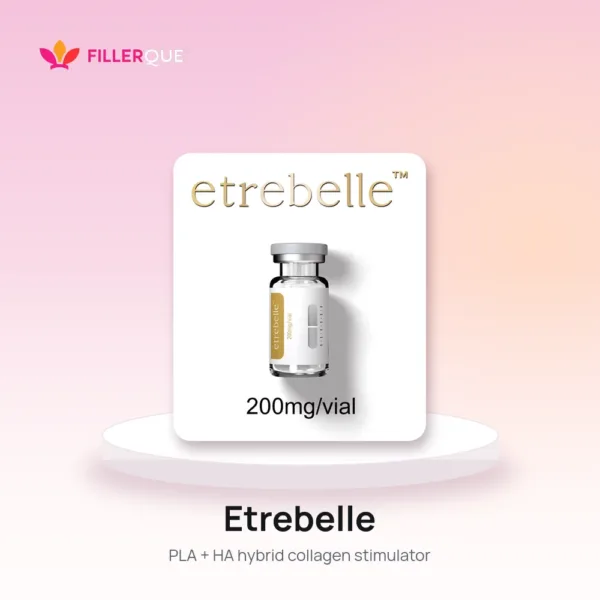
- Etrebelle — a hybrid of PDLLA 170 mg and hyaluronic acid 30 mg in a 200 mg vial, plus a PN version that combines PLA with polynucleotides.
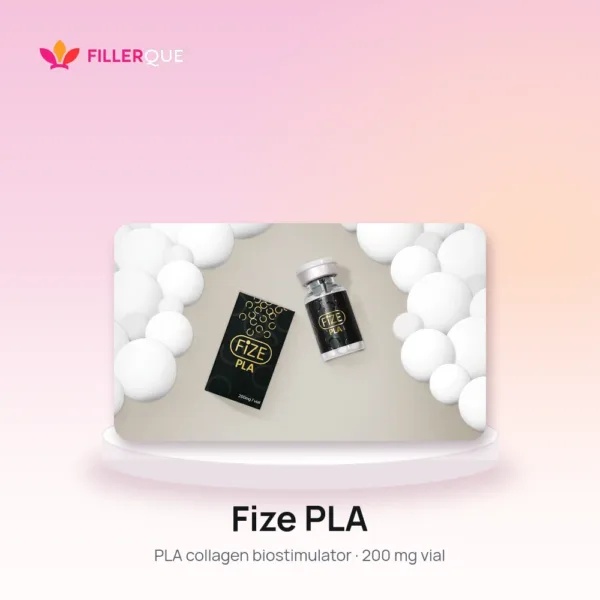
- Fize PLA — a 200 mg vial of polylactic acid with CMC by BNC Global.
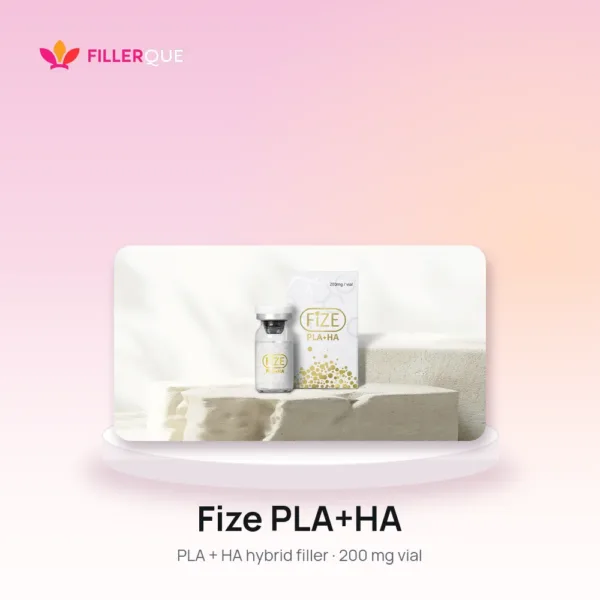
- Fize PLA+HA — a hybrid of 150 mg PLA and 50 mg HA in a 200 mg vial.
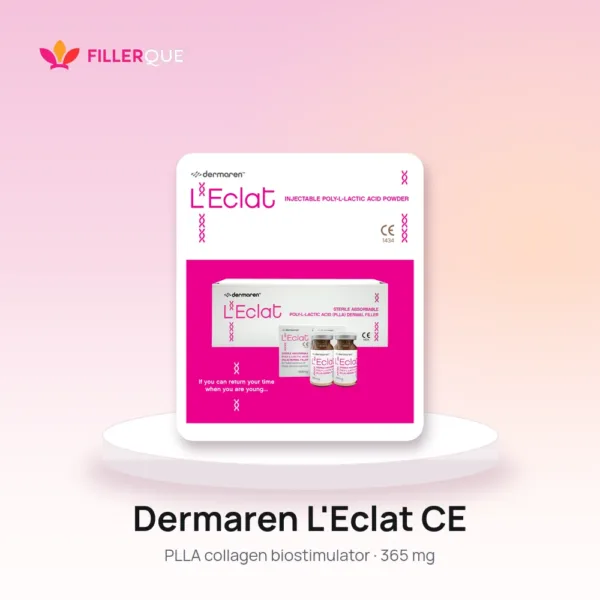
- Dermaren L’Eclat CE — PLLA 150 mg with sodium CMC 90 mg and mannitol 125 mg in a 365 mg vial.
All of them are in the Polylactic Acid (PLA) category with full composition on each product page.
How to choose
- For skin quality, fine lines and texture, practitioners often choose lower-dose products or hybrids with hyaluronic acid.
- For volume loss — temples, cheeks, the lower face — higher-dose vials are used, such as Juvelook Volume or 200 mg hybrids.
- For a combined regenerative effect, PLA + PN versions add polynucleotides to the collagen stimulation.
- Workflow matters too: reconstitution time, the recommended diluent volume and needle or cannula size differ between products. Always follow the instructions for the specific product.
PLA, HA fillers and hyaluronidase
PLA products are not hyaluronic acid fillers and cannot be dissolved with hyaluronidase. This is why careful patient selection, correct dilution and technique matter more than with HA. Many clinics combine both: an HA filler for immediate contour and a PLA stimulator for long-term skin quality.
Prices are in AED, orders are confirmed within 1 business day and shipped insured — see Delivery & payment. For clinic volumes, ask for wholesale pricing.
This article is for healthcare professionals and is not medical advice. Collagen stimulators must be used by qualified practitioners according to the manufacturer’s instructions.